Cómo elegir zapatos con puntera de acero para tu trabajo: guía práctica


Walk into any warehouse, construction site, or factory floor and you'll find people in pain. Not because they got hurt by a falling object — that's rare — but because their feet are wrecked by lunchtime. The irony is that plenty of them are wearing safety shoes. They're just wearing the wrong ones.
Choosing steel toe footwear isn't complicated once you know what to look for. But there's a lot of misleading information out there — specs that sound impressive on paper but fall apart in a real shift, and marketing language that has little to do with how a shoe actually performs. This guide cuts through all of it.
Why the "steel vs. composite" debate misses the point

Every buying guide starts here, and most of them treat it like a dealbreaker. It isn't. Both steel toe and composite toe shoes meet ASTM F2413 impact and compression standards. The difference in protection level, for most workers, is negligible.
What actually matters is the use case. Steel conducts temperature — in a freezer warehouse in January or on a sun-baked roof in July, that matters. Composite doesn't conduct, doesn't set off metal detectors (relevant if you work in airports or courthouses), and is typically lighter. Steel is slightly more compact, so the toe box can be narrower at the same protection level — which can help or hurt depending on your foot shape.
Honest take: if you work outdoors in extreme temperatures or need to pass through security screening regularly, go composite. For most indoor environments — warehouses, manufacturing floors, kitchens — either works fine, and you should make your decision based on fit and comfort instead.
Quick note on ASTM standards: Look for ASTM F2413-18 on the label. This covers impact resistance (75 ft-lbs) and compression resistance (2,500 lbs). If a shoe doesn't list this certification, it's not genuinely safety-rated, regardless of what the product description says.
The features that actually make a difference on a ten-hour shift

1. Puncture resistance — don't skip it
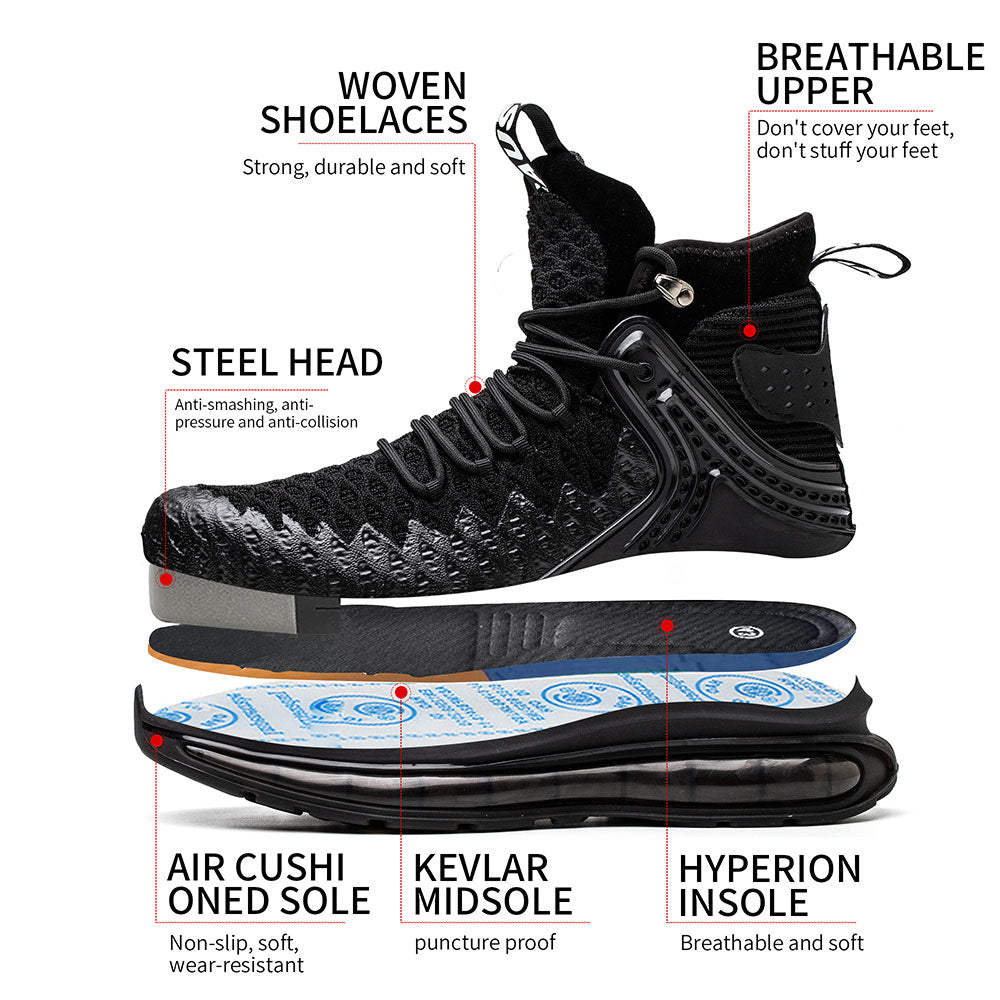
Most workers focus entirely on the toe cap and forget about what's underneath. A puncture-resistant midsole — typically a steel plate or Kevlar layer — protects against nails, rebar, and sharp debris coming up through the sole. On construction sites and in facilities that handle sharp materials, this is non-negotiable. Our steel toe shoes collection includes several models with built-in puncture resistance that holds up well past the break-in period.
2. Slip resistance — the underrated safety feature
Slips and trips account for far more workplace injuries than falling objects. Yet most workers give the outsole about five seconds of attention. Look for rubber outsoles with a multi-directional lug pattern, and check whether they're oil-resistant as well as water-resistant — these are different things. A sole that grips on wet concrete may still be slippery on an oily surface.
3. Breathability — more important than most realize
Hot, damp feet aren't just uncomfortable — they increase friction, lead to blisters, and over time cause real skin problems. For jobs in warm environments or active roles where you're moving constantly, a breathable mesh upper makes a meaningful difference. The tradeoff is that mesh offers less abrasion resistance than leather, so it's better suited to cleaner environments. For outdoor or rough terrain work, a water-resistant upper with ventilation panels strikes a better balance.
4. Cushioning and insole quality — where most shoes cut corners
Factory insoles in budget safety shoes compress within a few weeks of daily use. Once that happens, you're essentially walking on a hard shell all day. When evaluating a shoe, pay attention to whether the insole is removable so you can swap in an aftermarket orthotic, and look for EVA or air-cushion midsoles that maintain rebound over time.
Workers who deal with plantar fasciitis, flat feet, or chronic back pain should look specifically at our orthopedic steel toe shoes — built with ergonomic insoles and wider toe boxes that reduce foot fatigue significantly over long shifts.
5. Ankle support and collar height
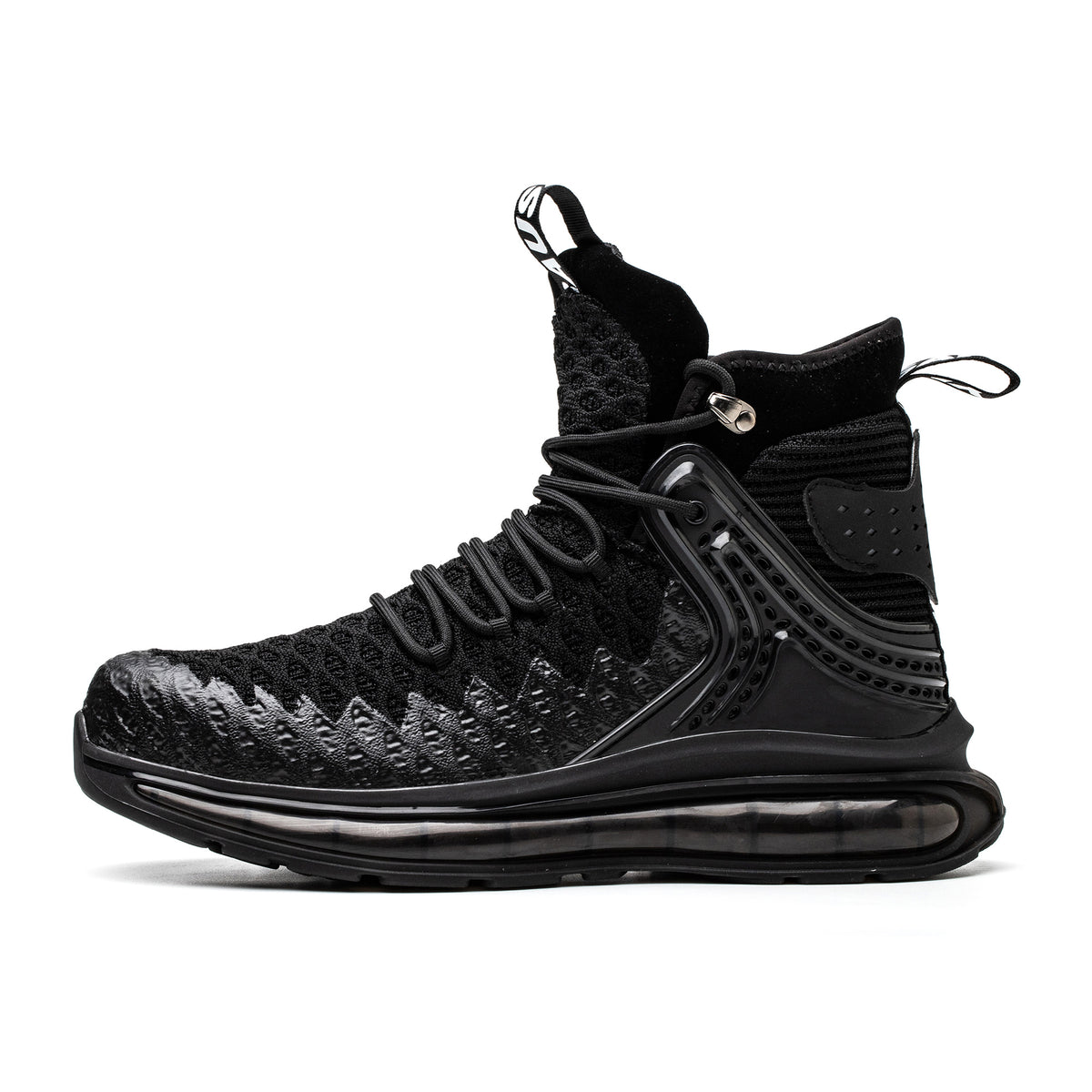
Low-cut shoes work fine for flat, even surfaces. If you're working on uneven terrain, climbing ladders, or spending time on scaffolding, a higher collar provides lateral ankle support that genuinely reduces injury risk. It also helps keep debris out of the shoe — something that sounds minor until you've had to stop mid-shift to shake grit out of your footwear.
Matching shoe type to your work environment

No single shoe is right for every job. Here's a practical breakdown:
- Construction / outdoor work: Prioritize waterproofing, puncture-resistant midsoles, and durable outsoles. High-cut or mid-cut designs help with ankle stability on uneven ground.
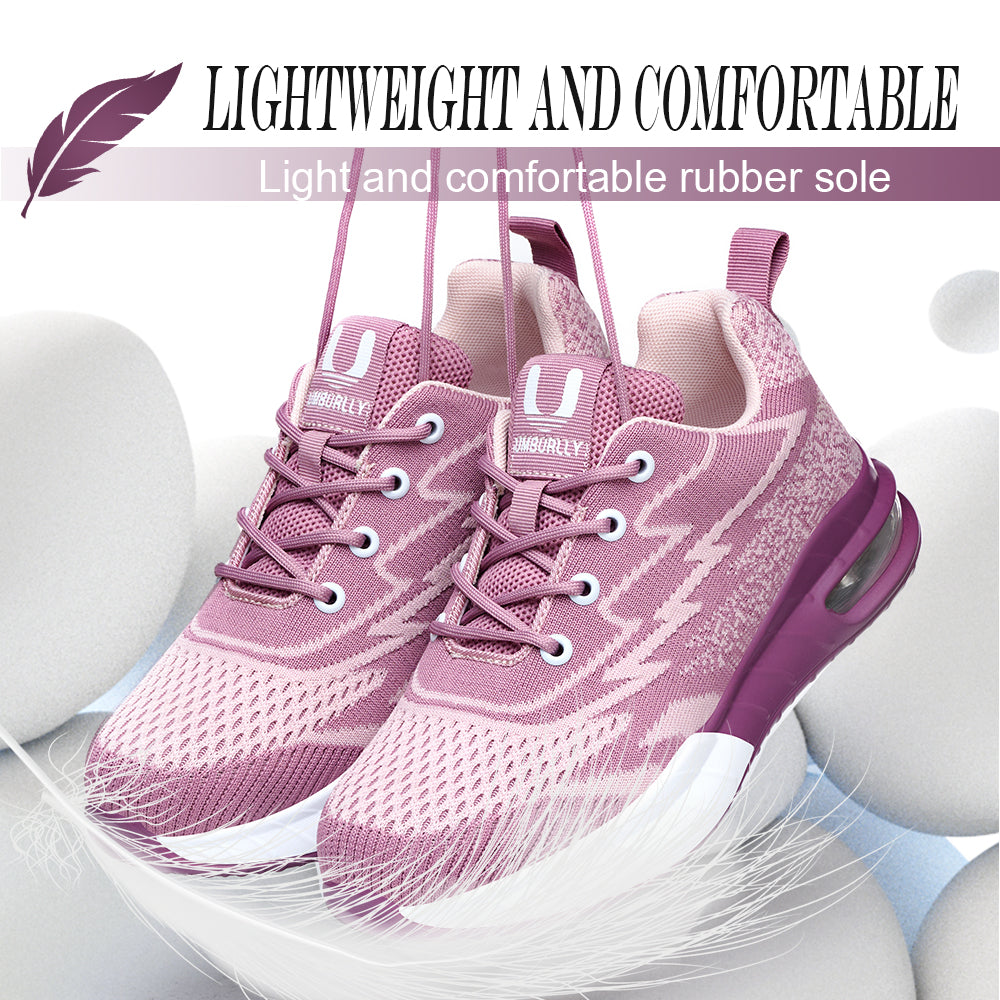
- Warehouse / logistics: Comfort and slip resistance matter most. You cover significant ground daily — lightweight designs with good cushioning reduce fatigue considerably. Our lightweight steel toe options are popular with warehouse workers for exactly this reason.
- Manufacturing / factory floors: Anti-static properties matter if you work near sensitive electronics. Look for ESD-rated footwear. Chemical-resistant outsoles are worth considering if your floor sees regular spills.
- Welding: You need heat-resistant uppers and outsoles, and ideally leather or a similarly fire-resistant material. Mesh uppers are not appropriate here.
- Restaurant / hospitality: Slip resistance on oily surfaces is the primary concern. Low-cut, lightweight designs work well since the main hazard is the floor rather than falling objects — though a steel toe still provides valuable protection.
- Healthcare / lab environments: Composite toe is usually preferred to avoid metal detector issues. Closed toe, easy to clean, and slip-resistant.
Getting the fit right — and why it matters more than the spec sheet
This is the part most guides rush through, and it's arguably the most important section.
Feet swell during the day — often by half a size or more. If you try shoes on in the morning and they feel perfect, they may feel uncomfortably tight by 3pm. The standard advice is to try footwear in the afternoon if possible. If ordering online, size up half a size if you're between sizes, and always check the return policy before buying.
The toe cap should sit about a thumb's width ahead of your longest toe. This isn't just about comfort — if your toes press against the cap, the protection geometry changes and the shoe can cause more harm than it prevents in an impact scenario.
Width is where most people go wrong. Standard safety shoes assume a medium width. If you have wide feet, a standard-width shoe will compress the forefoot, restrict circulation, and cause significant pain over a long shift. Our orthopedic range includes wide-fit designs built specifically for this.
Sock thickness matters: Always try on work shoes wearing the same socks you'll use on the job. Thin dress socks and thick work socks can differ by a full shoe size in effective fit. A shoe that fits perfectly over thin socks may be uncomfortably tight over heavy-duty work socks.
How long should a good pair of steel toe shoes last?

For full-time daily use, a quality pair should last 12 to 18 months before the outsole wears to a point where slip resistance is genuinely compromised. The upper typically lasts longer, but an outsole that no longer grips is a safety issue regardless of how good the rest of the shoe looks.
Signs your safety shoes need replacing:
- Tread is worn smooth in high-contact areas, particularly the heel and ball of the foot
- The midsole has compressed to the point where you can clearly feel the ground through the shoe
- The upper is separating from the sole
- You're experiencing new foot or knee pain that wasn't there when the shoes were newer
- The toe cap has taken a significant impact — even if the shoe looks fine externally, the protective structure may be compromised
A note on women's sizing and fit

For a long time, women's safety footwear was just a smaller version of men's shoes — which created real fit problems. Women's feet have a different width-to-length ratio, higher arches on average, and a narrower heel relative to the forefoot. Shoes designed without these differences in mind cause heel slippage, forefoot pressure, and accelerated fatigue.
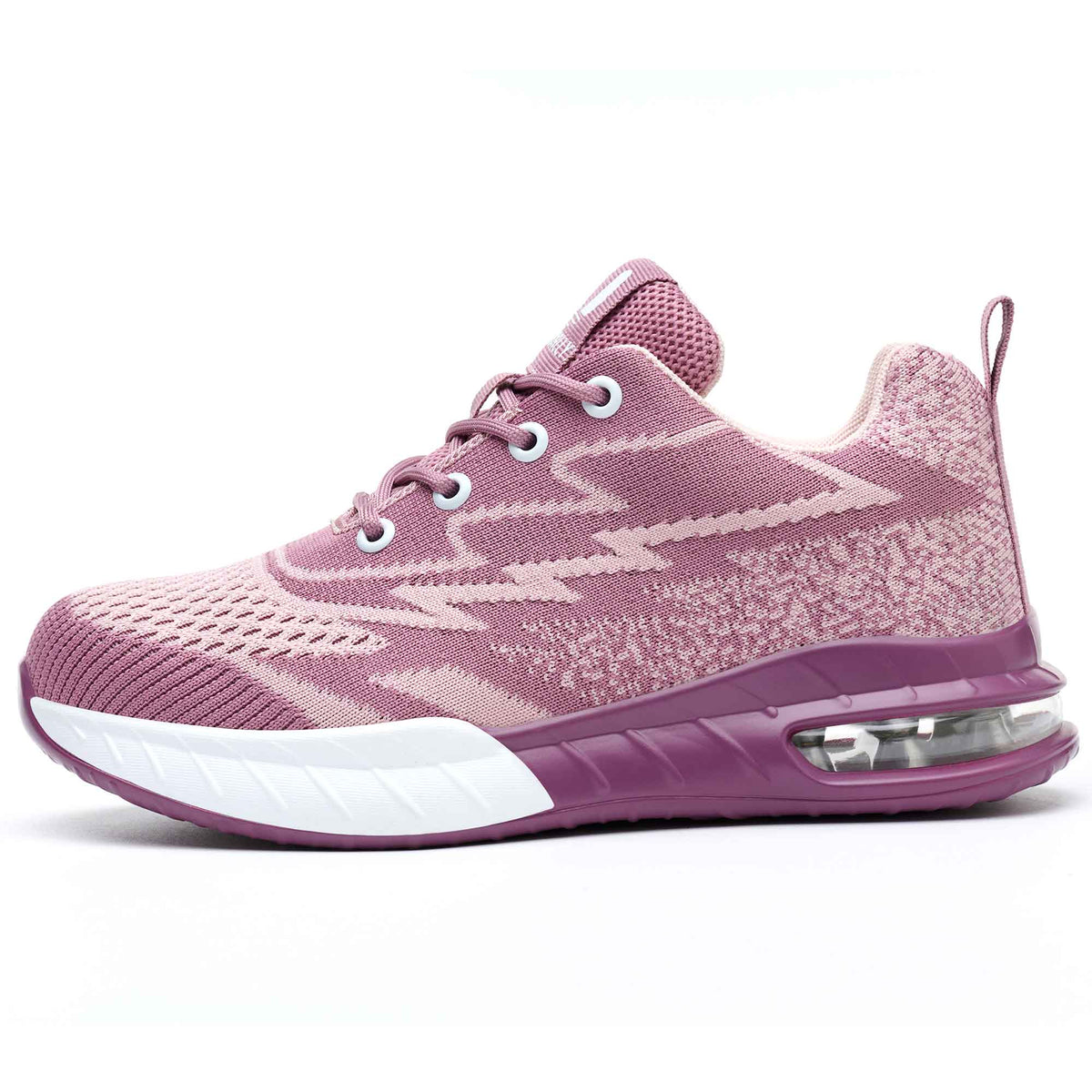
If you're shopping for women's safety footwear, look for shoes built on women's-specific lasts. Our women's steel toe shoe collection is designed with this in mind, which makes a noticeable difference in comfort over a full shift.
The bottom line
The best safety shoe is the one you'll actually wear properly — meaning it fits well enough that you don't loosen the laces to relieve pressure, don't take it off at lunch, and don't dread putting it on in the morning. Protection specs matter, but a shoe you can't tolerate for a full shift isn't protecting you.
Take the fit seriously, match the features to your specific work environment, and don't expect a shoe designed for a warehouse to serve you well on a construction site. Get those three things right and the rest is straightforward. Browse our full range of steel toe shoes to find a model built for your job.